
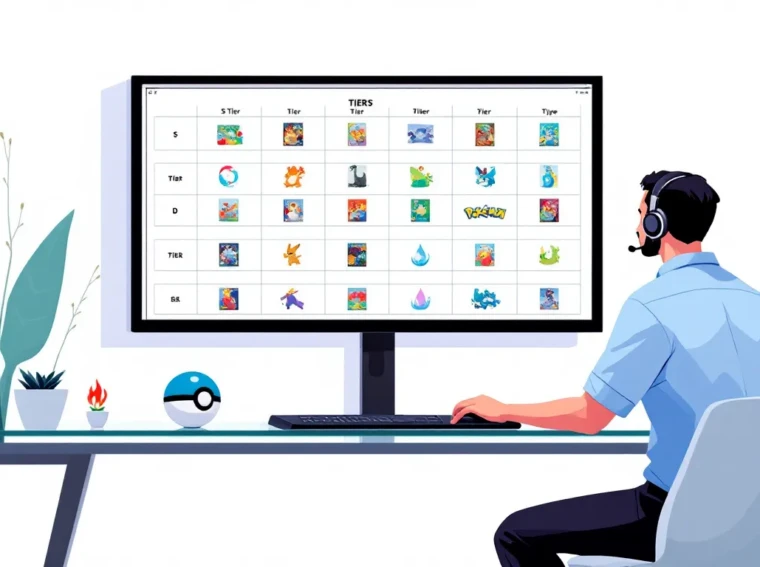
Whether you’ve been catching ’em all since Gen I or just jumped in with Scarlet and Violet, one question sits at the heart of every Pokémon fan’s collection: which games are actually worth your time? A Pokémon game tier list cuts through the nostalgia, the marketing hype, and the “but gen 4 is superior” arguments to deliver honest rankings based on design, gameplay depth, and lasting appeal. This isn’t about what you played as a kid, it’s about what holds up now, which titles defined the franchise, and which ones fell short of expectations. We’re breaking down every mainline Pokémon game across generations, explaining why each one earns its spot, and giving you the tools to build your own tier list so you can settle the debates in your own community.
Key Takeaways
- A Pokémon game tier list should rank titles based on gameplay mechanics, roster diversity, story quality, longevity, and technical execution rather than nostalgia alone.
- S-tier Pokémon games like Crystal, Emerald, FireRed and LeafGreen, HeartGold and SoulSilver, and Platinum set the standard by combining challenging trainers, compelling stories, balanced mechanics, and meaningful postgame content.
- Games like Black 2 and White 2 and Scarlet and Violet earned A-tier rankings through bold design choices—sequel innovation and open-world design—that pushed the franchise forward despite minor flaws.
- Lower-tier Pokémon games such as Diamond and Pearl, Let’s Go Pikachu and Eevee, and Pokémon GO either oversimplified mechanics, failed to respect player time, or prioritized profit over engaging gameplay.
- Creating your own Pokémon game tier list forces critical evaluation of your priorities as a player and reveals what you truly value: story depth, competitive balance, replayability, or nostalgic joy.
- Professional tier lists from community platforms like Tier List Maker, Reddit forums, and YouTube provide reference points and reasoning that sharpen your own critical analysis of each generation’s strengths and weaknesses.
What Makes a Pokémon Game Worth Ranking
Ranking Pokémon games isn’t just about opinion, it’s about identifying the criteria that separate legendary experiences from forgettable ones. A Pokémon game lives or dies based on its core gameplay loop, roster quality, competitive viability, story engagement, and how well it respects player time. Some titles nailed the fundamentals while pushing boundaries: others became stepping stones to greater installments.
Gameplay mechanics matter enormously. The battle system, AI difficulty, and exploration pacing shape how many hours you’ll actually enjoy playing. A game with bland AI and spoon-fed tutorials wastes potential, while one with challenging gym leaders and meaningful strategy keeps players engaged for 50+ hours. Type matchups, ability mechanics, and move pools all affect how satisfying combat feels.
Roster diversity is another heavyweight factor. Having access to a healthy mix of Pokémon types across your journey determines whether you’re forced into awkward team compositions or genuinely spoiled for choice. Games with limited dex availability punish team-building creativity and make playthroughs feel restrictive.
The story and world-building elevate good games to great ones. Players spend dozens of hours traversing these worlds, so characters need depth, villains need weight, and the narrative needs to justify the journey. Forgettable NPCs and thin plots drag down even solid mechanics.
Finally, longevity matters. Can you replay it? Does competitive viability exist? Are there post-game activities that make sense? A game that ends abruptly after the champion battle loses points to one packed with meaningful end-content.
S-Tier Pokémon Games: The Absolute Classics
Pokémon Crystal stands as the ultimate Gen II experience. Crystal rebuilt Gold and Silver’s foundation, fixed the grueling level curve, expanded Lugia and Ho-Oh accessibility, and gave players the first true postgame storyline with the Kanto region. The UI refinements, better AI, and Pokéwalker-style engagement made it the definitive Johto title. Even today, its pacing holds up.
Pokémon Emerald is the consensus masterpiece of Gen III. Emerald perfected Ruby and Sapphire’s structure by rebalancing the Gym Leader and Elite Four levels, introducing Wallace as a compelling rival, and delivering one of the franchise’s strongest stories with Team Aqua and Team Magma’s ideological conflict. The expanded Pokédex access, superior AI, and post-game legendary hunting created a complete package. The Double Battles framework introduced here rippled through competitive play for years. If you’ve played the original Ruby and Sapphire, A Comprehensive Pokemon Alpha Sapphire Guide shows how the remakes improved on them.
Pokémon FireRed and LeafGreen revitalized Gen I for modern audiences. The originals are historically important but mechanically dated, FireRed and LeafGreen preserved what made Kanto legendary while adding abilities, held items, and the Physical/Special split foundation. They proved remakes could respect source material while solving its problems. The physical cartridges became the standard way to experience Kanto for over a decade.
Pokémon HeartGold and SoulSilver completed Gen II’s redemption arc. Gold and Silver’s foundation was rough, Crystal fixed it, but HeartGold and SoulSilver brought it to DS-era perfection. The Pokéwalker gimmick encouraged daily engagement, the expanded level curve eliminated grinding nightmares, and following Pokémon added charm to every route. The Gym Leader and Champion battles finally felt appropriately challenging. These remain the best way to experience Johto and set the standard for what remakes should accomplish.
Pokémon Platinum is widely considered Gen IV’s definitive entry. Diamond and Pearl moved slowly and featured a limited dex until postgame: Platinum addressed both, added Steel-type Cynthia as the generation’s toughest final boss, revamped Gym Leader and Elite Four teams with competitive movesets, and refined the UI. The Distortion World storyline with Giratina added thematic weight. Platinum’s competitive groundwork influenced high-level play for years.
A-Tier Pokémon Games: Excellent Experiences
Pokémon Black 2 and White 2 delivered sequel innovation that the franchise rarely attempts. Rather than remixing the same game, these sequels advanced the story two years later, featured exclusively new Pokémon until postgame (forcing players to adapt), introduced the first truly threatening rival in Champion Iris, and packed Gym Leader and Elite Four rosters with balanced, competitive movesets. The Challenge Mode unlocked harder difficulty settings. These games treated players like they’d played before and adjusted accordingly, a lesson modern Pokémon often forgets.
Pokémon Black and White didn’t need to be A-tier, but their ambition lands them here. They took the biggest swing Gen V could muster: only new Pokémon for the main campaign, forcing nostalgia-driven players to invest in unfamiliar creatures. The Unova region drew from New York architecture, the story involved moral questions about Pokémon liberation, and the AI received a significant difficulty bump. Sure, the game moved slowly and the Pokédex felt small, but the design philosophy, make players rebuild their understanding of type matchups and team composition, was bold.
Pokémon Scarlet and Violet launched as glitchy messes but fundamentally changed the franchise structure. The open-world design, three branching storylines, and player choice over progression order represented the shift Pokémon needed. Yes, the engine visibly struggled, and optimization was rough, but the design freed players from linear progression for the first time. The actual battles and team-building remained solid. Performance issues prevent a higher tier ranking, but the direction matters.
Pokémon X and Y struggle with game design, the EXP Share breaking balance and Mega Evolution being overtuned, but the Kalos region design, character development, and technical modernization earned respect. It was the first true 3D mainline entry, and while not perfectly balanced, it succeeded in transporting players into that world. Mega Evolution sparked competitive interest even though its balance problems.
B-Tier Pokémon Games: Solid and Enjoyable
Pokémon Sun and Moon introduced Z-Moves, important Totem Pokémon difficulty spikes, and meaningful story progression with Lillie and Lusamine. The removal of traditional Gyms for Trials felt fresh, and the Alola dex featured creative regional variants. The story beats hit harder than earlier generations. But, excessive cutscenes, limited post-game content, and balance problems (ultra-broken Pokémon like Landorus) hold them back from higher tiers. The pacing issues wore on even enthusiastic players during longer sessions.
Pokémon Ultra Sun and Ultra Moon fixed some Moon’s problems with improved level curves and Totem team adjustments, but Necrozma’s absurd difficulty spike became legendary for the wrong reasons. Still, these represent competent refinements, not as bold as Black 2 and White 2, but better-executed than the originals.
Pokémon Sword and Shield provided a complete Pokédex experience (until DLC), solid Gen VIII mechanics, and the Wild Area’s early glimpse at open-world design. Dynamax battles added spectacle, and competitive viability was strong. Yet the story felt generic, post-game content remained thin, and the Dexit (permanent Pokédex cut) angered longtime players. The games played it safe when they had the technology to innovate.
Pokémon Legends: Arceus earned respect for departing from turn-based combat with action-RPG elements. It proved Pokémon could feel different while remaining Pokémon. The real-time throwing mechanics, base-building, and Hisuian Pokédex felt purposeful. But, limited team depth, repetitive exploration, and minimal post-game kept it from higher ranking. It’s excellent as a spinoff: as a mainline experience, it’s unconventional in ways that don’t always land.
For more on specific generation strengths, A Timeline and History of Pokemon Video Games provides detailed context on how each generation evolved.
C-Tier Pokémon Games: Good But Flawed
Pokémon Diamond and Pearl sit in an awkward spot: historically important but mechanically miserable. The level curve punishes player progression, physical moves deal reduced damage (before the Physical/Special split), fire-type availability is abysmal, and everything moves at glacial speed. Cynthia’s champion team hits like a truck against unprepared players. These games weren’t bad, they introduced the Sinnoh region and established foundational mechanics, but replaying them reveals design choices that frustrate modern sensibilities. Platinum existed for a reason.
Pokémon Ruby and Sapphire created the double-battle framework and delivered the Hoenn region’s charm, but the games themselves struggle. The level curve spikes inconsistently, water routes dominate the map and limit team diversity, and Gym Leaders don’t use particularly intelligent strategies. Wallace (in Emerald) replaced Wallace’s predecessor, improving narrative coherence. The originals feel dated compared to their enhanced successor.
Pokémon Gold and Silver revolutionized the franchise by doubling the adventure, but execution faltered badly. The level curve forces grinding, Pokémon level distribution is bizarre, and the Johto region’s pacing drags. These games needed fixing. They earned their place through ambition and sequel-building, but they required Crystal’s, HeartGold and SoulSilver’s refinements to feel complete. The original releases are historically significant: they’re not necessarily fun to replay.
Pokémon Let’s Go Pikachu and Eevee oversimplified mechanics for mobile accessibility. Catching mechanics replaced traditional battles for wild encounters, level scaling removed challenge, and the Pokédex froze at 151 (plus regional variants). Kids enjoyed it: serious players found it boring. It’s a good introduction to Pokémon for five-year-olds, not a game designed for the audience that already understood the franchise. The game sold millions even though mediocre mechanics, a casualty of riding Pokémon GO’s nostalgia wave.
D-Tier Pokémon Games: Decent Attempts
Pokémon Sword and Shield: The Isle of Armor and The Crown Tundra (the DLC packs) improved the base game with post-game Dynamax Adventures and solid boss encounters. But, they felt half-finished at the base game’s launch, were priced aggressively ($30 each), and only partially addressed the main game’s shortcomings. The Dynamax Adventure raid mechanics were actually engaging, but the DLC should’ve solved base-game issues rather than being sold separately as solutions.
Pokémon Brilliant Diamond and Shining Pearl attempted to remake Gen IV’s foundation but oversimplified the experience. The Exp Share change made difficulty nearly impossible to control, the chibi art style divided fans, and AI trainers felt braindead. They’re not offensively bad, the Pokédex is robust, and affection mechanics added charm, but they wasted the opportunity to fix Diamond and Pearl’s core problems like their terrible fire-type availability. For deeper information on these remakes, see the An In-Depth Pokemon XD Game Guide for comparative analysis.
Pokémon Legends: Arceus DLC content felt supplementary rather than essential. While the Hisuian variants were creative, the base game didn’t have enough depth to sustain substantial DLC. It’s a competent experience within Arceus’s framework, not a game-changer for the base experience.
Pokémon Scarlet and Violet DLC: The Teal Mask and The Indigo Disk continued the open-world foundation and added meaningful post-game content. The Titan Pokémon mechanic returned, and the Indigo Disk’s competitive Tournament format was solid. But, performance remained problematic, and the DLC price ($35 each) felt steep for the hours delivered. They’re necessary purchases for competitive players but optional for casual ones.
F-Tier Pokémon Games: Below Expectations
Pokémon Sword and Shield deserves its own mention here due to its wasted potential. A full generation with no postgame Pokédex, limited Wild Area exploration (even though proving the concept worked), and generic story beats created a sense that Game Freak was coasting. With Pokémon being the highest-grossing media franchise globally, the lack of ambition stung. The Dexit decision (cutting hundreds of Pokémon) justified by graphics and balance felt dishonest when comparisons showed marginal technical improvements.
Pokémon Legends: Arceus, even though being B-tier, had significant F-tier moments. The repetitive move mechanics, bland dungeons, and minimal post-game content created the feeling of a proof-of-concept rather than a finished product. It’s a spinoff with interesting ideas, not a mainline game with substance.
Pokémon GO (as a mainline experience) represents the franchise at its most cynical. Designed as a monetized walking simulator rather than a traditional game, it succeeded commercially through augmented reality novelty, not compelling gameplay. The mechanics are paper-thin, PvP remains shallow, and the core experience hasn’t evolved significantly since 2016. For a comprehensive breakdown of mobile Pokémon gaming, A Comprehensive Pokemon GO Game Guide provides strategies for the format.
Franchise experimentation isn’t inherently bad, New Pokémon Snap, Pokémon Mystery Dungeon, and others earned goodwill through clever design. Games landing here simply failed to deliver engaging experiences even within their attempted scope.
How to Create Your Own Pokémon Game Tier List
Creating a tier list forces you to articulate why you value certain games over others. The process isn’t about finding an “objective” ranking, it’s about understanding your own priorities as a player.
Factors to Consider When Ranking Games
Start with mechanics fundamentals. How does the battle system feel? Are type matchups meaningful, or are Pokémon power levels wildly imbalanced? Does the game respect your team-building decisions, or does it force optimal strategies? Rate difficulty consistency: Can you tune the challenge through team composition and strategy, or does the game spike unpredictably?
Evaluate roster availability next. Can you build diverse teams without grinding or repeating types? Do legendary Pokémon dominate wild encounters, limiting your options? Consider typing: Does the region’s gym and trainer distribution force awkward matchups, or does it encourage strategic flexibility?
Assess story and pacing. Does the narrative justify the journey, or does it feel like filler between battles? Are NPCs memorable, or are they generic quest-givers? Rate pacing: Does the game move at a satisfying speed, or does excessive handholding (or grinding requirements) drag the experience?
Measure longevity. What’s the post-game offering? Can you replay it with a self-imposed challenge, or are you finished once credits roll? Does competitive viability exist, or is the metagame already determined by broken Pokémon?
Finally, factor in technical execution. Does the game run smoothly? Are there game-breaking glitches? Does the UI respect your time, or do animations and menus feel sluggish?
Tools and Communities for Tier List Creation
Multiple platforms exist for building and sharing tier lists. Tier List Maker offers free, easy tier list creation with customizable images. The community tier lists hosted there show how other players rank Pokémon games, giving you reference points and sparking disagreement, the fun kind that drives discussion.
Reddit communities like r/pokemon and r/TruePokémon host ongoing tier list debates with detailed reasoning. These discussions reveal blind spots in your own rankings and introduce perspectives you hadn’t considered.
Sites like Game8 and Twinfinite publish tier lists from their writers, providing professional benchmarks. While not gospel, they offer structured reasoning you can agree with or counter. Comparing your list to theirs sharpens your own critical thinking.
YouTube tier list videos from gaming channels provide narrated walkthroughs of ranking logic. Creators explain which games they’d replay, which they’d skip, and which they’d recommend to specific audiences. These nuanced takes prevent the “best game ever” syndrome that oversimplifies ranking.
Community spreadsheets on Discord or gaming forums let players crowdsource rankings by weighted criteria (story, mechanics, roster, etc.). Some communities score games numerically and average results, a transparent, reproducible approach that can reveal surprising consensus or heated disagreements.
The beauty of creating your own list is that it’s personal. Your tier list reflects your values as a player: Do you prioritize story and character? Then games like Black 2 and White 2 and Scarlet and Violet rank higher. Do you care only about tight mechanics and competitive balance? Then Pokémon Crystal and Emerald dominate your top tier. Your list is a conversation starter, not a decree.
Conclusion
A Pokémon game tier list cuts through nostalgia and personal bias to identify which titles actually delivered great experiences. The S-tier classics, Crystal, Emerald, FireRed and LeafGreen, HeartGold and SoulSilver, and Platinum, set the standard for what mainline Pokémon games should accomplish: compelling stories, challenging trainers, balanced mechanics, and meaningful postgame depth. The A and B tiers showcase ambition (Black 2 and White 2’s sequel innovation, Scarlet and Violet’s open-world gamble) and solid execution (X and Y, Sun and Moon), while lower tiers expose games that played it safe or oversimplified core mechanics.
Your own tier list matters more than any ranking published here. Build it based on what you value: mechanical depth, story weight, replayability, competitive potential, or simple nostalgic joy. The framework above, evaluating mechanics, roster diversity, narrative, longevity, and technical quality, gives you a structured approach to rank games honestly rather than defaulting to “gen [your childhood] is the best.”
Whether you’re grinding through a C-tier replay or finally tackling an S-tier classic, understanding why games land in their tiers makes every playthrough more intentional. Now get out there, start that tier list, and prepare for debates with friends who somehow think Pokémon Go belongs anywhere but the basement.