
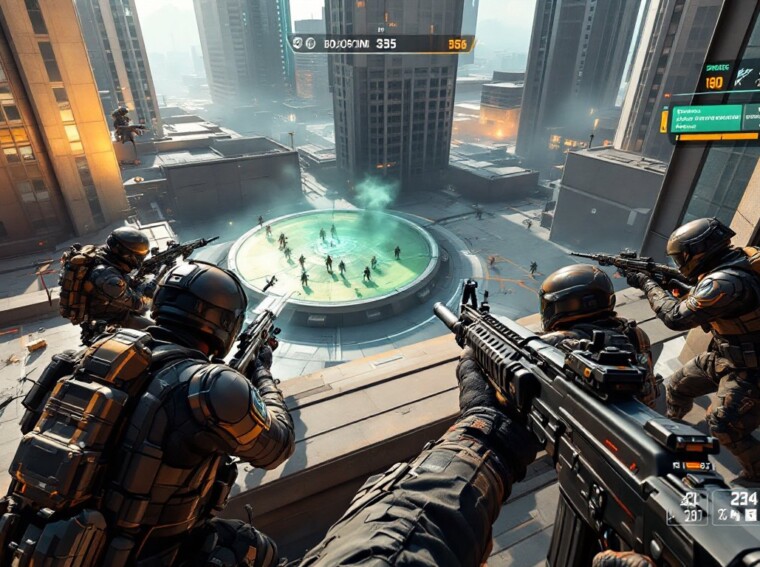
Call of Duty Warzone remains one of the most competitive free-to-play battle royales on the market, demanding skill, strategy, and constant adaptation. Whether you’re dropping into a match on PlayStation, Xbox, PC, or through Call of Duty war zone mobile, understanding the fundamentals separates winners from those watching the respawn timer. This guide breaks down everything you need to dominate matches, from landing strategy to endgame positioning, with the specificity competitive players expect and casual gamers appreciate.
Key Takeaways
- Call of Duty Warzone’s in-match economy system—where you collect cash for killstreaks, armor, and redeployment—rewards looting efficiency and strategy as much as raw gunplay skill.
- Your first 60 seconds are critical: secure a weapon, grab armor plates, and collect cash to establish dominance throughout the match.
- Master positioning and circle rotation 2-3 cycles early by studying the tactical map and claiming high-ground positions before chaotic endgame encounters.
- Custom loadouts created in Gunsmith are essential—secure a free drop or buy one early to amplify your gunplay consistency and confidence.
- Squad communication via pings and callouts, combined with coordinated armor management, often determines victory more than individual mechanical skill.
- Understanding your weapon’s time-to-kill (TTK) at specific ranges helps you know when to push, hold, or disengage for tactical advantage.
What Is Call Of Duty Warzone?
Call of Duty: Warzone is a free-to-play, large-scale battle royale developed by Infinity Ward and Raven Software, published by Activision. Launched in March 2020 as part of Call of Duty: Modern Warfare, it’s since evolved to integrate content from Black Ops Cold War and Vanguard, creating a unified progression system across titles.
The core appeal lies in its blend of arcade-style gunplay with strategic battle royale mechanics. Matches support up to 150 players (100 on newer maps) across cross-platform lobbies, PS5, Xbox Series X
|
S, PC, and now mobile. The game has matured from a Modern Warfare (2019) tie-in into a standalone experience with its own seasonal content, weapon balance patches, and map rotations.
What makes Warzone stand out is the in-match economy system. Unlike pure elimination-focused shooters, you collect cash during matches to purchase killstreaks, armor plates, self-revives, and team redeployment, a mechanic that rewards looting efficiency and contract completion as much as raw gunplay.
Core Gameplay Mechanics And How To Win
Battle Royale Fundamentals
Matches begin with a plane drop across the map. You choose when to jump, then parachute to your landing spot with zero gear. From there, it’s a race against the clock and enemy squads.
The playable area shrinks every few minutes via a lethal gas circle. This forces rotation and engagement, preventing camping at the map’s edges. As the circle tightens, positioning becomes critical, controlling high ground, key buildings, and sightlines often determines who survives late-game pushes.
Your first 60 seconds are crucial: find a weapon, grab armor plates, and secure cash. The difference between winning and placing third often comes down to these opening moments. Landing hot (high-traffic areas) offers better loot but higher risk: landing cold trades safety for slower gear-up.
The Gulag offers a unique mechanic: after your first death in Battle Royale, you earn a 1v1 duel for a free redeploy. Win the Gulag, and you’re back in the fight. Lose, and you’re spectating unless a teammate has cash for a Buy Station redeploy.
Loadouts And Weapon Selection
Custom loadouts, created in Gunsmith with specific weapon attachments, equipment, and perks, are the backbone of competitive play. You don’t start with your preferred setup: instead, you grab loadouts during the match via three methods:
- Free Loadout Drops spawn naturally during matches (usually mid-game)
- Buy Station purchases let you spend in-match cash for immediate loadout access
- Stronghold captures in newer iterations grant loadout drops to your squad
Weapon selection depends on engagement range and your squad’s role. Assault rifles and LMGs dominate mid-to-long range thanks to accuracy and damage per second (DPS). SMGs and shotguns excel in close-quarters building fights. Sniper rifles and marksman rifles handle peak shoots and long-sightline holds.
Recent meta shifts have favored balanced assault rifles with modern attachment optimization. A proper loadout isn’t just about raw stats, it’s about recoil control, ADS (aim down sights) speed, and how it synergizes with your play style. This is where understanding the strongest Warzone weapons and attachment setups becomes essential for improving performance.
Essential Tips For Dominating Matches
Secure an early loadout and armor plate supply. Don’t waste cash on random streaks early: buy armor plates and get your custom loadout as soon as possible. Having your preferred weapon setup amplifies your confidence and gunplay consistency.
Complete contracts strategically. Recon contracts (revealing nearby loot and enemies) and Scavenger contracts (providing cash and items) are gold early-game. Bounty contracts add risk but reward coordinated teams. Avoid wasting time on low-value contracts when rotation pressure is mounting.
Master the Tactical Map. Call of Duty’s in-game map shows the next circle’s location before it activates. Plan rotations ahead of time, identify high-ground approach routes, and avoid getting caught rotating open in the gas. Teammates caught off-guard during rotations are free kills.
Control positioning over kills. Many new players chase every firefight they hear. Veteran players rotate to the expected endgame zone 2-3 circles early, claiming elevated positions and cover before the chaos arrives. One pre-positioned squad facing three disorganized arrivals usually wins.
Buy Station control in late game is underrated. If your squad holds a Buy Station when the final circles hit, you control late-game cash flow. Deny enemies self-revives, armor, and killstreaks, often forcing them into disadvantageous pushes.
Communication is non-negotiable. Pings mark enemy positions, loot, and rotations without cluttering voice chat. Callouts like “two-stack rotating through the building, upper floor” give teammates the milliseconds they need to position correctly. Squad coordination often trumps individual skill.
Understand your weapon’s time-to-kill (TTK) in specific ranges. If your loadout’s assault rifle peaks at 25 meters but you’re fighting at 50 meters, you’re at a disadvantage. Knowing when to push, hold, or disengage based on TTK separates consistent players from inconsistent ones. For deeper loadout tuning, check recommended weapon setups and effective range optimization.
Manage your sensitivity and graphics settings. Console players benefit from lower sensitivity (5-8 range) for precision: PC players vary widely based on DPI. Disabling motion blur, reducing visual clutter, and ensuring 100+ FPS (on PC) improves reaction time. Performance tweaks and sensitivity recommendations can directly impact your hit rate and survivability in firefights.
Armor plates are life. Always carry at least three armor plates. A full-plated squad absorbs twice the damage of a non-plated one. Plate your teammates immediately after revives, and retreat to repair plates before re-engaging.
Whether playing on console or exploring Call of duty modern warfare 2.0 loadout transfers, or testing your skills in the mobile version’s faster-paced rotation, these principles apply universally.
Conclusion
Warzone success hinges on mastering circle rotations, building efficient loadouts, managing your in-match economy, and maintaining squad coordination. The game rewards both mechanical skill and strategic thinking. Whether you’re grinding ranked matches or casual quads, focus on fundamentals: position wins fights, loadouts win gunfights, and communication wins matches. The meta shifts with patches, but these core principles remain timeless.