
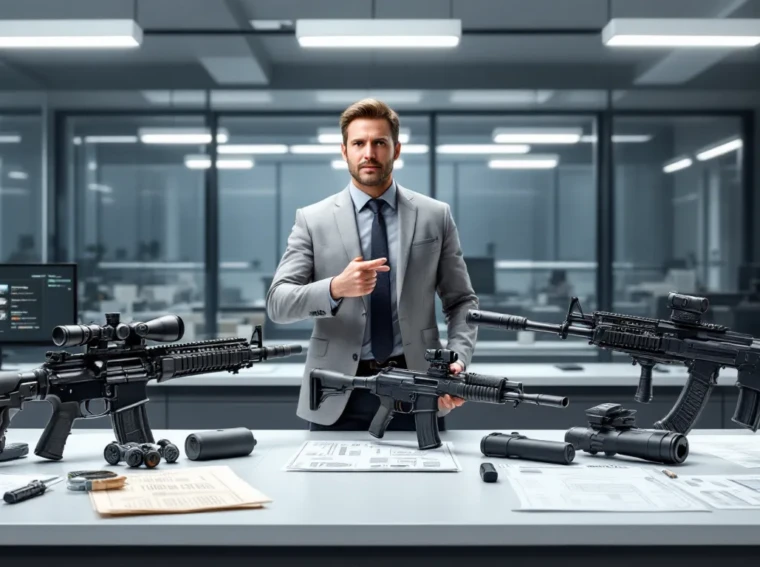
Ever notice how the M4A1 in Call of Duty feels different from the AK-74? That’s not accident, Infinity Ward and Treyarch spend serious time researching real military hardware to make their weapons feel authentic. Whether you’re grinding multiplayer or running through a campaign, the guns you’re holding are inspired by actual firearms used by armed forces worldwide. This article dives into the real weapons behind Call of Duty’s arsenal, showing you which guns exist in reality, how they compare to their in-game counterparts, and why developers prioritize authenticity. Understanding the connection between the virtual and the real transforms how you see the game’s weapon balance and design.
Key Takeaways
- Call of Duty guns in real life are meticulously researched by developers who consult military advisors, study ballistics, and sometimes attend range days to ensure authentic weapon behavior and handling.
- Real weapon characteristics directly influence game balance: the M4A1’s low recoil and the AK-74’s harder kick reflect their actual military performance, grounding gameplay in genuine firearm design.
- Assault rifles dominate multiplayer versatility, submachine guns excel in close quarters, and sniper rifles reward precision—each class mimics real military roles and tactical applications.
- Call of Duty blends authenticity with gameplay balance by simplifying complex ballistics into learnable mechanics, ensuring all weapon classes remain viable across different playstyles rather than perfect physics simulation.
- Attachment systems like suppressors, scopes, and extended magazines are modeled on actual military customization standards, with stat adjustments that capture real-world trade-offs in handling and performance.
- Fictional weapons fill gameplay balance gaps and differentiate Call of Duty’s identity, but the franchise’s foundation remains rooted in documented military hardware and design philosophy.
Understanding The Weaponry Behind Call Of Duty
Call of Duty has built its reputation on tight gunplay and meticulous weapon representation. From the early Modern Warfare days to the latest Black Ops installments, each gun feels distinct because the developers ground their designs in real military specifications. They study ballistics, recoil patterns, firing rates, and handling characteristics of actual weapons, then translate those properties into game mechanics.
The franchise spans decades of military history, Cold War weapons, modern-era guns, and speculative future tech all coexist in the series. This historical breadth means some Call of Duty weapons are carbon copies of real designs, while others are composite creations blending multiple firearms or entirely fictional inventions. Understanding which guns are real versus imagined helps you appreciate the design philosophy behind each weapon’s stats and handling.
Developers don’t just slap names on generic models. They consult military advisors, study weapon reviews, and sometimes attend range days to hear and feel how these guns actually perform. That dedication shows in details like reload animations, the sound design, and how recoil behaves.
Why Real Weapons Matter To Game Authenticity
Authenticity in Call of Duty guns serves multiple purposes beyond just looking cool. First, it builds immersion. When you fire a weapon in-game and it behaves similarly to its real counterpart, the experience feels grounded and tactile. Gamers recognize the distinctive handling of an M16A4 versus an AK-47, and that familiarity deepens engagement.
Second, real weapon representation informs weapon balance. The M4A1 is accurate, fast-handling, and reliable in reality, traits reflected in-game where it’s often a starter rifle with low recoil. The AK-74, historically known for harder recoil and less precision at range, translates to higher recoil patterns in Call of Duty. This isn’t arbitrary: it mirrors reality.
Third, players researching real military gear or aspiring soldiers often use Call of Duty as a visual reference. Accurate weapon depiction supports education and demystifies military hardware for mainstream audiences. The franchise also attracts esports enthusiasts and Call Of Duty: Warzone competitors who demand precision and respect for the source material.
Finally, legal and ethical considerations matter. Developers must navigate licensing agreements with real weapon manufacturers and handle depictions responsibly. Games that invest in authenticity signal respect for the subject matter.
Assault Rifles: Power And Versatility In The Battlefield
Assault rifles define the meta in Call of Duty multiplayer. They balance damage, range, and handling, making them reliable for most engagements. The most iconic assault rifles in the franchise have direct real-world roots.
The M4A1 is the poster child for modern assault rifles in Call of Duty. It’s directly based on the Colt M4 Carbine, a shortened version of the M16 used extensively by U.S. military forces. In real life, the M4 fires the 5.56×45mm NATO round and features a 14.5-inch barrel (versus the M16’s 20-inch), making it compact and maneuverable, traits perfectly captured in-game. The weapon appears across multiple Call of Duty titles with slight variations in damage and recoil, but the core identity remains consistent.
Modern Examples And Their Real-World Counterparts
The AK-74 draws from the Soviet Avtomat Kalashnikova, designed in 1974 and still used globally today. It fires the 5.45×39mm cartridge and is known for its distinctive muzzle brake that produces significant recoil, exactly why it kicks harder in Call of Duty than the M4A1. The gun’s historical reliability and widespread use make it a staple across different eras in the franchise.
The SCAR-H (Special Operations Command Assault Rifle – Heavy) is a real weapon used by U.S. special operations forces. It’s chambered in 7.62×51mm NATO, a larger cartridge than the M4, giving it superior damage at range. Call of Duty reflects this, typically balancing the SCAR-H as slower but harder-hitting. Its modular design allows for rail-mounted attachments, which aligns with real-world configurations.
The Galil ACE is based on the Israeli Galil rifle, a proven design used by multiple nations. Modern versions like the ACE platform are in active service. In Call of Duty, it usually occupies a middle ground between precision and fire rate, a fair representation of its real-world positioning as a dependable all-rounder.
For players building loadouts, assault rifles typically pair well with precision attachments for longer-range engagements. Recent patch notes and meta discussions across gaming news outlets like Dexerto highlight how assault rifle balance shifts with each season, so recommendations may change as developers adjust damage multipliers and recoil patterns.
Submachine Guns: Close-Quarters Combat Excellence
Submachine guns (SMGs) excel at close range, combining high fire rate with handling agility. They’re the go-to choice for aggressive, run-and-gun playstyles. Most Call of Duty SMGs derive from real designs, though some are compressed or modified for balance.
The MP5 is arguably the most iconic SMG in the franchise and represents the Heckler & Koch MP5, a German submachine gun used by police and military units worldwide since the 1960s. It fires 9×19mm Parabellum rounds at approximately 800 rounds per minute and is legendary for reliability and accuracy. Call of Duty captures this with tight recoil and controllability, even at extended ranges for an SMG.
The UZI draws from the Israeli submachine gun of the same name, which saw service from 1950 onward and is still manufactured today. The real Uzi fires 9mm rounds at a very high rate (600 RPM in the original), and Call of Duty reflects this velocity with high fire rates and lower per-shot damage, classic SMG trade-offs.
The MAC-10 originates from the Military Armament Corporation’s design, used since the 1960s. It’s compact, fires fast, and packs minimal stopping power per round, exactly the balance Call of Duty implements. The gun is particularly effective in tight indoor maps.
From Game Balance To Tactical Reality
In real military and law enforcement contexts, submachine guns are used for close-quarters situations where precision isn’t the priority and speed matters. This translates directly to Call of Duty gameplay: SMGs dominate in hallways and small rooms but fall off rapidly at distance because 9mm rounds lack the energy of rifle cartridges.
Game developers maintain this realism while ensuring balance. If an SMG had laser-like accuracy at 50 meters, assault rifles would be pointless. So they cap effective range not through raw damage but through recoil patterns and bullet spread. The Loadout and similar competitive resources regularly update SMG tier lists reflecting patch changes, showing that meta-relevance shifts based on map rotation and developer tuning.
Notable submachine guns like the Milano 821 and LCAR-9 blend real inspirations with slight modifications. The Milano is influenced by the Beretta PM12 SMG, while the LCAR-9 is a composite design. This hybrid approach lets developers balance originality with authenticity.
Sniper Rifles: Precision And Long-Range Dominance
Sniper rifles are the ultimate precision weapons in Call of Duty. One well-placed shot ends fights. Developers invest heavily in sniper authenticity because skilled players notice details like scope magnification, bullet drop, and handling.
The AW50F (specifically in Advanced Warfare) is inspired by the AI AWM (.338 Lapua Magnum), an anti-material sniper rifle used for extreme long-range engagements. The .338 Lapua Magnum cartridge is renowned for retaining energy at distance, and the game balances this with one-shot kills across the map but slower handling due to the weapon’s weight and recoil.
The LW3A1 Frostline (found in Cold War) is a hybrid design with roots in real .338 Lapua Magnum rifles but includes fictional elements. The naming suggests a custom build, which is common for in-game weapons that blend real inspiration with game-specific balance.
The Kar98k is directly based on the Mauser Karabiner 98 kurz, a bolt-action rifle used extensively in World War II and still in limited use today. It’s less powerful than modern .338 rifles but faster-handling, reflecting real-world ergonomics where older designs trade power for portability.
Legendary Fictional Vs. Documented Designs
Not all Call of Duty sniper rifles are real. Some are entirely fictional creations, while others are exaggerated or composited designs. For example, the PU-DScope (from Black Ops games) is inspired by the PU scope used on Soviet Mosin-Nagant rifles, but the weapon itself is a composite creation rather than a direct copy. Developers do this to avoid licensing issues and allow gameplay flexibility.
The Barrett M82 is a real semi-automatic .50 BMG rifle used by military forces globally. Call of Duty typically portrays it with massive damage and slow handling, realistic given the .50 BMG cartridge generates enormous recoil and the rifle itself weighs over 30 pounds.
Competitive Call of Duty players often debate sniper rifles based on handling speed and true one-shot kill zones. Recent patches have shifted the meta: some seasons favor quick-scoping setups with lighter sniper rifles, while others push slower but more forgiving loadouts. Always check current patch notes before investing in a sniper rifle-focused loadout.
Shotguns And Tactical Weapons: Close-Range Destruction
Shotguns are instadeath machines at close range. They’re the pure melee alternative to SMGs, trading fire rate and handling for devastating damage. Real shotguns inspire Call of Duty’s shotgun arsenal, though the games often amplify their effectiveness for balance.
The Remington 870 is one of the most widely used shotguns globally, operated by law enforcement, military, and civilians since 1950. It’s pump-action, meaning you work the slide between shots. Call of Duty captures this with intentional reload mechanics and punishing fire rates if you miss, the gap between shots is genuinely slower than an SMG because that’s how pumps work.
The Combat Shotgun (various iterations across titles) draws from tactical shotgun designs like the Benelli M4, used by military operators. Semi-automatic shotguns fire faster and are favored for dynamic entry situations, something reflected in-game where semi-auto shotguns receive higher fire rates.
The Dual Wield Shotguns option in some Call of Duty games is a gameplay fantasy with real-world echoes. While rarely practical, dual shotguns appear in fiction and gaming because they amplify the “cool factor.” Developers include them as high-risk, high-reward options that dominate specific situations but have glaring weaknesses elsewhere.
Shotguns in Call of Duty are designed to be risky weapons requiring aggressive positioning. One poor engagement range and you’re vulnerable. This mirrors reality: shotguns are devastatingly effective indoors but become increasingly unreliable beyond 25-30 yards as the pellet spread widens. Maps are designed with shotgun corridors where they thrive, encouraging tactical decision-making.
Light Machine Guns: Suppressive Fire In Practice
Light machine guns (LMGs) balance the role between assault rifles and heavy support weapons. They offer sustained fire, larger magazine capacities, and increased damage, but sacrifice mobility. Call of Duty LMGs are drawn from real military designs serving similar tactical purposes.
The M60 is a real general-purpose machine gun adopted by the U.S. military in 1957 and still in service today. It fires 7.62×51mm NATO cartridges at roughly 550 RPM, generating substantial recoil and requiring significant ammunition supply. Call of Duty reflects this with higher damage per shot but pronounced recoil and slower handling compared to assault rifles.
The Stoner 63 is a historical weapon, an American modular machine gun platform from the Vietnam era designed by Eugene Stoner. While not widely adopted (the M60 dominated instead), its historical significance makes it a compelling in-game inclusion. It represents a lighter, more maneuverable LMG concept.
The RPD (Ruchnoy Pulemyot Degtyaryova) is a Soviet-era light machine gun still in use globally. It’s chambered in 7.62×39mm and fires at 650 RPM, making it lighter and more controllable than the M60 but still demanding respect for its suppressive capabilities. Game balance typically slots it between assault rifles and heavier LMGs.
LMGs in Call of Duty fill a niche: aggressive players pushing with assault rifles find LMGs too slow, while defensive anchors love pre-aiming with an LMG’s superior sustained damage. Recent meta analysis from gaming communities shows LMG viability fluctuates seasonally, with balance patches affecting their damage multipliers and handling speeds. LMG attachments and ammunition types matter significantly, so checking current patch notes before committing to an LMG-focused loadout is essential.
Handguns And Pistols: Reliable Secondary Options
Pistols serve as secondary weapons or emergency backups when your primary runs dry. While rarely the main focus in Call of Duty, they’re modeled on real sidearms used by armed forces and law enforcement.
The 1911 (.45 ACP) is an American classic designed by John Browning and adopted in 1911. It remains in use by some military units and is beloved by civilian shooters. Call of Duty treats it as a powerful but slower semi-automatic pistol, a fair representation of real .45 ACP ballistics.
The M9 Beretta is the standard-issue sidearm for the U.S. military since 1985, firing 9×19mm Parabellum rounds. In-game, it typically appears as a reliable, quick-drawing pistol with decent handling and moderate damage, accurate for 9mm ballistics.
The MW11 (appears in Modern Warfare 2019 and after) is inspired by the Sig Sauer P226, a professional pistol used internationally by military and law enforcement. It’s modeled as a precise, reliable handgun.
Some Call of Duty pistols push toward sci-fi territory. The Strife and other fictional designs allow developers creative freedom while maintaining the general aesthetic of recognizable firearms. This hybrid approach satisfies both authenticity seekers and those who want inventive gameplay options.
Modern Call of Duty games often include operator-specific pistols and melee weapons, adding variety. Whether you’re using a real M1911 or a futuristic energy weapon, the core principle remains: secondaries fill gaps when your primary is depleted.
Fictional Weapons That Transcend Reality
Not every Call of Duty gun exists in the real world, and that’s by design. Fictional weapons add identity to the franchise and allow developers creative latitude in balancing gameplay.
The Ray Gun is the franchise’s signature fictional weapon, a wonderweapon prominent in Zombies mode. It fires energy bolts rather than bullets, exists purely for game balance and fantasy fun, and has no real-world equivalent. It’s iconic to Call of Duty culture, even though (or because of) its sci-fi roots.
The Scorestreaks or Killstreak support weapons like the PHASR or various directed-energy weapons are entirely fictional. These weapons fill gameplay roles, AOE (area-of-effect) damage dealers, lock-on support tools, etc., that wouldn’t translate to real military hardware.
Why Some Call Of Duty Weapons Don’t Exist
Developers create fictional weapons for several reasons. First, gameplay balance sometimes requires a gun that doesn’t fit real-world physics. Second, licensing real weapon designs can be complex and expensive. Third, original creations differentiate Call of Duty from competitors like Battlefield or Rainbow Six Siege, which also use real weapons.
Future-focused Call of Duty games (like Advanced Warfare or Infinite Warfare) lean heavily on fictional tech, blending laser weapons, rail guns, and kinetic accelerators with grounded military aesthetics. This approach lets developers explore “what if?” scenarios while maintaining the tense gameplay feel players expect.
Mixing real and fictional weapons creates a hybrid experience: enough authenticity for immersion, enough originality for identity. Players appreciate this balance because it respects their intelligence while delivering fresh gameplay mechanics.
Evolution Of Weaponry Across Call Of Duty Titles
Call of Duty’s weapon arsenal has evolved dramatically since the franchise’s 2003 launch. Early games featured primarily Cold War and modern-era firearms. As the series progressed, weapon selection expanded to include historical, contemporary, and speculative future designs.
The original Call of Duty and United Offensive expansion used World War II weapons almost exclusively: the M1 Garand, Kar98k, Mosin-Nagant, MP40, and so on. These games prioritized historical accuracy within their timeframe, with weapon models and animations reflecting genuine period designs.
From Modern Warfare To Advanced And Future Warfare
Modern Warfare (2007) shifted focus to contemporary military hardware, the M4A1, M16A4, AK-47, and modern sniper platforms like the Barrett M82. This move established the foundation for Call of Duty’s current identity: using real modern weapons with slight balancing tweaks.
Black Ops introduced Cold War-era weapons, adding vintage Soviet and Western designs. This expanded the time-period range and allowed developers to explore weapons like the AK-74u, Commando (M16), and WA2000 sniper rifle. The series began blending eras, acknowledging that “modern” warfare draws from decades of military history.
Advanced Warfare and Infinite Warfare pushed into speculative future tech. Directed-energy weapons, exoskeletons, and sci-fi ballistics became central. While real weapons still appeared, fictional designs dominated. This direction was polarizing, some players loved the innovation, others preferred grounded modern settings.
Recent titles like Modern Warfare 2019, Warzone, and Cold War returned to realistic foundations, blending modern weapons with historical options. Developers listened to community feedback and recognized that authenticity resonates. The franchise now iterates on real designs rather than abandoning them entirely.
The evolution reflects not just technological progress but also community preferences and competitive balance needs. As the esports scene grew, demand for predictable, authentic weapon handling increased. GamesRadar+ and similar outlets tracked these shifts, showing how weapon meta evolved with each franchise entry.
How Game Developers Research And Implement Real Weapons
Creating authentic weapon representations demands research. Infinity Ward, Treyarch, and Sledgehammer Games employ multiple strategies to ensure accuracy.
Developers consult military advisors, historians, and weapons experts during pre-production. These consultants provide ballistics data, handling characteristics, and real-world performance metrics. Some studios arrange range visits where designers fire actual weapons to understand recoil, sound signatures, and tactical handling firsthand. This hands-on approach pays dividends in authenticity.
Designers study weapon specification sheets, military manuals, and video documentation. They measure barrel lengths, magazine capacities, cartridge specifications, and attachment compatibility. High-fidelity reference materials inform 3D models, ensuring proportions and details match reality. Scope magnifications, rail systems, and common modifications get replicated with surprising precision.
Balancing Authenticity With Gameplay Mechanics
Here’s the critical distinction: real weapon performance doesn’t always translate to fun gameplay. The developers must balance authenticity with balance.
Example: An M4A1 in reality is approximately 38 inches long and weighs 6-7 pounds fully loaded. In-game, movement speed and ADS (aim-down-sights) speed can’t reflect true physics, a lighter weapon would genuinely be faster, but that would make the M4 overwhelmingly superior. Instead, developers adjust animations and speed values to create gameplay distinction while maintaining relative accuracy. The M4 feels lighter and quicker than a full-size battle rifle, but not so absurdly that realism shatters.
Damage values require similar translation. A 5.56 NATO round does less kinetic damage than a 7.62 NATO or .338 Lapua Magnum in reality. Call of Duty reflects this with lower damage-per-shot for smaller cartridges, but applies that difference across engagement distances in ways that don’t perfectly match ballistics. This ensures all weapon classes remain viable across different playstyles.
Recoil patterns are another fascinating case study. Real weapons have distinct recoil signatures based on barrel length, gas system type, and ergonomics. Call of Duty captures the feel of that variation, an AK recoils harder and climbs higher than an M4, but recoil patterns are simplified for consistency and player learning curves. A player should be able to master an M4’s spray pattern through practice, not struggle with physics-accurate variability.
This balance is why patch notes matter. When developers tweak damage, recoil, or handling, they’re often correcting perceived imbalances that authentic representations created. A weapon that’s “too real” at balance might dominate or suck competitively.
Notable Real-Life Weapon Modifications In Call Of Duty
Call of Duty’s attachment system mirrors real-world weapon customization. Soldiers don’t field bare rifles, they mount scopes, suppressors, extended magazines, and grips. The franchise captures this with authentic attachment options.
Suppressors, for instance, are based on real sound suppressors (often called silencers, though “suppressor” is technically accurate). In reality, suppressors reduce muzzle blast by 20-35 decibels, making weapons quieter but not silent. Call of Duty reflects this trade-off: equipped suppressors reduce damage slightly and lower detection range, mimicking how suppressors add back-pressure and slightly reduce velocity. The balance isn’t perfectly realistic, but the principle holds.
Optics and scopes follow real designs. The ACOG Scope (Advanced Combat Optical Gunsight) is a real magnified optic used by military forces, offering fixed 4x magnification. Developers include it with similar sight picture and zoom level. The PEQ-15 IR Laser is an actual infrared laser system used to designate targets and improve hip-fire accuracy. Game versions increase hip-fire accuracy, capturing the laser’s real-world purpose of aiming without relying on sights.
Attachments And Customization Rooted In Reality
Magazine attachments are pulled directly from reality. Extended magazines, drum magazines, and belt-fed systems are all genuine designs with corresponding models in-game. The game balances them fairly: extended mags increase ammo capacity but add weight, reducing handling speed.
Grips, rails, and furniture (handguards, stocks) are modeled after real modular systems like Picatinny rails, allowing developers to show realistic attachment capabilities. An M4 in-game can mount optics, lasers, foregrips, and underbarrel attachments in combinations reflecting real M1913 Picatinny rail systems.
Barrel attachments vary from compensators to muzzle brakes, each with real-world counterparts. A compensator redirects gas to reduce vertical recoil, while a muzzle brake redirects it to reduce horizontal climb. Call of Duty simplifies this into recoil-reduction mechanics, but the core concept persists.
Large construction projects at Bytesize Games and competitive gaming sites often dissect attachment mechanics, showing how real-world design principles translate into stat adjustments and handling changes. Understanding these connections helps players make informed loadout choices rather than following tier lists blindly.
Conclusion
Call of Duty’s weapon arsenal represents a thoughtful blend of military authenticity and gameplay balance. From the M4A1’s reliable handling to the AK-74’s distinctive recoil, real-world inspiration grounds the experience and rewards players who understand actual weapon characteristics. The franchise proves that authenticity and fun aren’t mutually exclusive, they reinforce each other when executed with precision.
Developers invest in research, consultation, and hands-on experience to create weapons that feel genuine. They study ballistics, firing characteristics, and modular customization, then thoughtfully translate that knowledge into game mechanics. Fictional weapons fill gameplay gaps and add identity, but the foundation remains rooted in military reality.
As you build your next loadout or analyze the meta, remember that the stats and animations you’re evaluating often reflect actual firearm design philosophy. The M4’s precision mirrors its real-world handling. The AK’s harder recoil echoes Soviet engineering. The sniper’s one-shot power reflects .338 Lapua Magnum ballistics. That authenticity enriches gameplay and deepens the connection between virtual combat and the military hardware it represents. Whether you’re climbing competitive ranks or exploring campaign stories, you’re engaging with thoughtfully researched weapons that respect both gaming craft and military heritage.