
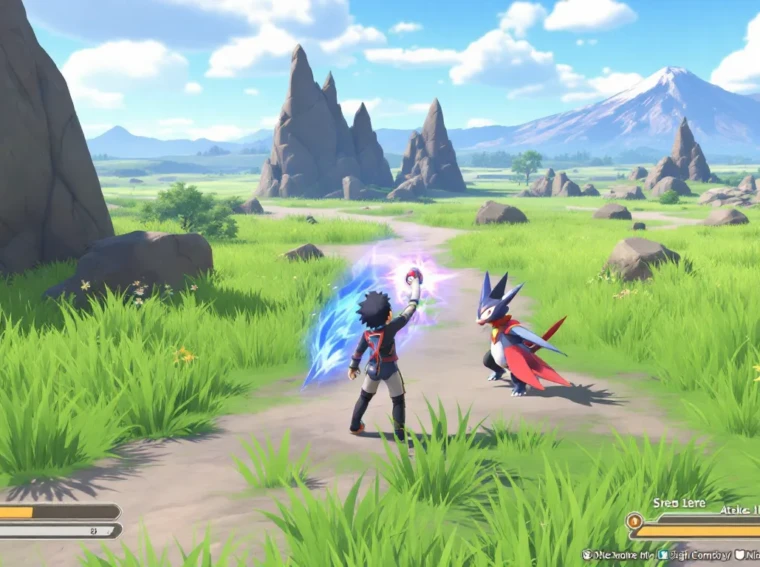
Pokémon Legends: Arceus flipped the script on what a mainline Pokémon game could be. Instead of turn-based gym battles and fixed camera angles, Game Freak delivered a real-time action experience set in Hisui, a region inspired by feudal Japan. Released in January 2022 for Nintendo Switch, Legends: Arceus still stands as one of the most distinct entries in the franchise, blending action mechanics with creature-catching depth. Whether you’re jumping in for the first time or looking to optimize your playstyle, understanding the game’s mechanics, from active combat to stealth catching, is essential. This guide breaks down everything you need to know to master Pokémon Legends: Arceus gameplay, complete your Pokédex, and tackle every challenge the region throws at you.
Key Takeaways
- Pokémon Legends: Arceus gameplay shifts from turn-based battles to real-time action where player positioning, dodging, and timing directly affect combat outcomes.
- Master the dual attack styles—Strong Style deals more damage but slows your Pokémon, while Agile Style trades power for speed—to adapt to different opponent types.
- Stealth catching rewards patience and observation; approach Pokémon carefully, stay downwind, and use distance and behavior reading to maximize catch rates without startling creatures.
- Build a balanced team with diverse Speed stats, type coverage, and role diversity rather than relying on one overleveled creature to tackle Hisui’s challenges.
- Complete your Pokédex by prioritizing research tasks (like using specific moves in battle or witnessing evolutions) and catching duplicates of species to progress Research Levels efficiently.
- Avoid wasting premium Pokéballs on common creatures and save resources like Ultra Balls and Gigaton Balls for alpha Pokémon and legendaries you actually need to catch.
What Sets Pokemon Legends: Arceus Apart From Traditional Pokemon Games
Pokémon Legends: Arceus isn’t a traditional turn-based Pokémon game, and that’s precisely what makes it special. In earlier mainline titles, you’d sit back and watch your Pokémon attack while the opponent went through their motions. Legends: Arceus yanks you into real-time battles where your position, timing, and active dodging matter. Your player character is equally vulnerable, you can’t just ignore incoming attacks and hope your Pokémon tanks the damage.
The core loop is fundamentally different, too. Instead of walking through grass and encountering random battles, you’re thrown into open areas (though not full open-world) where Pokémon roam visibly. You see a Staravia perched on a cliff, a herd of Buizel near water, or a Ursaring prowling through tall grass. You’re the hunter, not an accidental tourist stumbling into encounters. This shift means strategic positioning, terrain awareness, and patience become your allies.
The Pokédex itself is reframed as a research tool. Completing it isn’t just about “catching them all”, it’s about documenting behaviors, attack patterns, and evolution methods. You earn tasks like “use Thunderbolt 10 times in battle” or “see Alakazam defeat three opponents.” These tasks drive gameplay naturally rather than feeling like arbitrary checklists.
Combat happens on a shared battlefield. Your Pokémon, enemy Pokémon, and you all occupy the same space. A Pokémon’s attack might miss your creature but threaten you directly. Boss battles against alpha Pokémon, oversized, aggressive creatures that patrol territories, create intense, skill-based encounters that reward quick reflexes and good type coverage. These aren’t scripted gimmick fights: they’re genuinely challenging even for experienced players.
Understanding the Real-Time Action Combat System
Pokémon Legends: Arceus combat strips away menu navigation during battles. When you throw a Pokéball or send out your creature, you’re entering an active arena. Your character can move, dodge incoming attacks, and position yourself strategically. This isn’t Monster Hunter-level micromanagement, but it’s far more engaging than traditional Pokémon’s “select attack, wait” flow.
Each Pokémon has a Speed stat that determines action order, but unlike traditional games, Speed is visualized in real-time. Faster Pokémon act more frequently in a turn cycle, creating a dynamic rhythm. You’re watching a speedometer, essentially, and timing matters. A slow, powerful Pokémon might land fewer hits, but they hit harder.
Attacks come in two styles: Strong Style and Agile Style. Strong Style attacks do more damage and have higher accuracy but slow your Pokémon down, reducing their action frequency temporarily. Agile Style attacks hit faster and let your creature act again sooner, but they’re weaker. This toggle between power and speed adds tactical depth. Against a fast opponent, you might spam Agile attacks to keep up. Against a slow tank, Strong attacks whittle health faster.
Attack accuracy isn’t guaranteed. Moves have inherent accuracy ratings, and weather, terrain, and item effects all influence hit rates. A Thunderbolt in rain is nearly guaranteed: the same move during sandstorm suffers accuracy penalties. This means switching Pokémon, managing items, and reading conditions matter significantly.
How to Dodge and Counter Enemy Attacks
Your character’s survival depends on active dodging. When an enemy Pokémon targets you with a move like Ember, a red circle appears on your character, that’s your cue to move. Sprint sideways, use the terrain for cover, or back away entirely. You can’t block: you have to reposition. Getting hit doesn’t just damage you, it can also inflict status conditions like burns or paralysis, crippling your mobility.
Counters are context-dependent. You don’t have a dedicated counter button. Instead, you’re reading Pokémon behavior and responding. Some attacks have longer telegraphs, a Pokémon charging for a second before unleashing Giga Impact gives you reaction time. Others are faster. Learning visual cues is essential. A Garchomp lowering its body slightly before using Earthquake signals danger: move away before impact.
Positional awareness is your defense. If you’re far from the action, fewer attacks target you. If you’re standing next to a Pokémon, you’re vulnerable. This sometimes means backing up or circling around the battlefield rather than staying close. It feels like a lightweight action game, not a traditional Pokémon battle.
Type Advantages and Strategic Pokémon Selection
Type matchups still matter enormously, perhaps more than in traditional Pokémon games. In turn-based battles, a type disadvantage is annoying. In Legends: Arceus, it can mean the difference between winning and losing, especially against alpha Pokémon or trainer battles.
Super-effective moves deal 2x damage and apply pressure quickly. A Water-type move against a Fire-type Pokémon doesn’t just chip health, it swings momentum. Conversely, resisting attacks lets your Pokémon tank hits and recover. Building a team with solid type coverage is non-negotiable. You’ll want Pokémon that cover each other’s weaknesses.
Critical hits are high-value, especially if you’re facing a powerful opponent. Moves with high crit rates (like Focus Blast or Night Slash) create opportunities for sudden damage spikes. Some abilities boost crit rates or trigger secondary effects. Combining high-damage moves with type advantage and good speed stats creates a winning formula.
Status moves, like Thunder Wave, Toxic, or Will-O-Wisp, are underrated. Paralyzing a fast opponent reduces their speed, evening the playing field. Burning a physical attacker cripples their damage output. These tactical plays often matter more than raw damage numbers, especially in extended battles where attrition sets in.
Catching Pokémon: Stealth, Timing, and Techniques
Catching is where Pokémon Legends: Arceus truly shines. You’re not grinding random encounters in tall grass: you’re actively stalking creatures, reading their behavior, and executing catches with precision. The system rewards patience and observation over button-mashing.
You approach Pokémon from a crouch, staying downwind when possible (tall grass and terrain blocks line-of-sight). A Pokémon’s awareness is indicated by its behavior, if it’s eating, sleeping, or unaware of you, you have a window to throw a Pokéball. If it notices you, it either flees or becomes aggressive. Some Pokémon are naturally hostile: others are docile. A Mareep grazing peacefully might ignore you. A Croconaw prowling will immediately rush you.
Your movement speed matters. Walking slowly keeps you stealthy longer than sprinting. You can throw from range, but distance reduces accuracy and catch rates. The ideal approach is creeping close enough to guarantee accuracy without spooking the target. This sometimes takes a minute or more, especially with wary Pokémon.
Weather and time of day affect Pokémon behavior and availability. Certain species are only active at night. Rain changes which creatures appear. Some Pokémon are rarer in certain conditions. Checking your map and planning routes based on what you’re hunting makes grinding less tedious.
Reading Pokemon Behavior and Patterns
Each Pokémon species has distinct behavior patterns. A Ponyta might graze in one area, then wander to another. A Drifloon drifts around randomly, making it hard to predict. Braviary flies in predictable circles. Understanding these patterns, whether a creature is territorial, herd-based, or nomadic, lets you intercept them more reliably.
Aggression levels vary dramatically. A Timid Pokémon might flee at the first sign of danger. A Cranky one charges immediately. Some, like Gible, are unpredictably aggressive. Knowing a species’ temperament helps you plan approaches. A naturally docile Pokémon is a low-stress catch: an aggressive one demands caution.
Food and resources attract Pokémon. Berries scattered on the ground draw creatures into feeding zones. If you chuck apricorns near a Pokémon, it might be distracted enough for a safe throw. This adds a strategic layer, bait targets to safer locations rather than pursuing them into dangerous territory.
Size variation is real. Alpha Pokémon are significantly larger, stronger, and more aggressive. Regular-sized creatures are your baseline. On the flip side, tiny Pokémon exist too. Size affects stats, an alpha Charizard is genuinely threatening: a regular one is manageable. Learning to distinguish alpha individuals by their size and golden glow helps you avoid frustrating encounters.
Choosing the Right Pokéball for Maximum Success Rates
Pokéball choice directly impacts catch rates. The standard Pokéball is your baseline, but specialized variants offer advantages. Great Balls have higher catch rates than standard balls. Ultra Balls are even more reliable. Specialty balls target specific conditions or species.
Ultra Balls are your go-to for difficult catches, alpha Pokémon, legends, and high-level creatures. They cost more resources (Apricorns and crafting materials) but justify the investment. If you’re after a specific Pokémon and your standard ball misses twice, switch to an Ultra Ball.
Grass Balls work great on Grass types. Poke Balls fired at Grass Pokémon have higher success rates. Similarly, Great Balls work on all creatures but Poké Balls specialize. Fast Balls are essential for speedy targets like Electrode or Alakazam, their high catch rate for fast Pokémon compensates for their speed stat. Heavy Balls penalize light Pokémon but reward you for catching heavy creatures like Onix or Steelix.
Dusk Balls increase catch rates at night. Wing Balls work on flying Pokémon. Feather Balls target airborne creatures. Jet Balls are specialized for water encounters. Gigaton Balls are crafted and have exceptional catch rates, reserved for your toughest targets.
Status affects catch rates, too. A poisoned, paralyzed, or frozen Pokémon is easier to catch. Sleep is even better. Inflicting status before throwing dramatically improves success. Carry Paralyze Powder or Poké Balls with paralysis-inducing moves to set up easier catches.
Catch combos matter. Catching the same species repeatedly increases catch rate for that species on subsequent attempts. After 5 catches, you get a boost. At 20, it’s significant. This mechanic rewards focused grinding on specific Pokémon, making the Pokédex completion goal feel achievable rather than grindy.
Exploration and Fast Travel Mechanics
Hisui isn’t a true open world, it’s divided into five distinct areas that you unlock progressively. Obsidian Fieldlands is your starter zone, followed by Crimson Mirelands, Cobalt Coastlands, Coronet Highlands, and Alabaster Icelands. Each region is semi-open: you can explore freely but invisible walls and natural barriers guide progression. This design prevents softlocking while maintaining discovery and agency.
Movement is your main travel method early on. Walking, sprinting (which consumes stamina), and sneaking are your tools. Once you catch Pokémon that can carry you, things change. Wyrdeer (evolved Stantler) lets you traverse grasslands fast. Basculegion lets you navigate water. Sneasler lets you climb cliffs. Braviary takes you airborne. Each region has specific traversal needs, and unlocking these Pokémon opens new areas organically.
Fast travel exists but isn’t instant. Camp sites are scattered throughout each area, and you can fast-travel between discovered camps. This prevents tedious backtracking. But, camps are spaced strategically, you can’t just teleport everywhere. Walking between camps, catching along the way, and battling encounters creates natural pacing.
Terrain hazards exist. Swamps slow you down. Snow reduces visibility. High grass hides threats. Learning to navigate efficiently means using terrain to your advantage, staying in tall grass to approach Pokémon, using natural cover, and avoiding areas packed with aggressive creatures unless you’re prepared.
Navigating Hisui’s Regional Areas Efficiently
Each region has a meta-layout. Obsidian Fieldlands is small and accessible: you’ll clear it quickly. Crimson Mirelands sprawls and feels overwhelming initially, map out important waypoints early. Cobalt Coastlands wraps around a coast: water navigation is essential. Coronet Highlands feature vertical climbing: you’ll spend time ascending cliffs and discovering high-altitude Pokémon. Alabaster Icelands are the largest and require careful route planning due to ice mechanics.
Quests are location-specific. Rather than markers everywhere, you’ll get directions like “near the waterfall” or “in the northern cave.” Learning landmarks helps. A large tree, a distinctive rock formation, or a known Pokémon nest becomes your mental map. This encourages genuine exploration instead of quest-marker following.
Weather affects navigation. Heavy snow in Alabaster Icelands reduces visibility dramatically. You’re moving slower, seeing less. Rain in Crimson Mirelands makes grass taller and vision murkier. Planning exploration during clear weather is efficient.
Pokémon density varies by region and time. Early-game areas are packed with low-level creatures: late-game zones have scarce, high-level spawns. Respawning happens but isn’t immediate. If you clear all Pokémon from a route, you can cycle to another area and come back to find new spawns.
Resource gathering happens during exploration. Apricorns grow on trees (specific colors in specific areas). Mushrooms hide in caves. Honey is harvested from beehives. These materials craft Pokéballs and items. Knowing where to find specific resources saves grinding later.
Building Your Perfect Team and Training Strategies
Team composition is more important in Legends: Arceus than in traditional Pokémon games because of active combat and real-time mechanics. A balanced team with type coverage, speed variation, and role diversity outperforms a team of high-level creatures with overlapping strengths. You’re not just building for raw power: you’re building for tactical flexibility.
Diversity in Speed stats matters. A team full of slow, bulky creatures leaves you vulnerable to fast opponents. Conversely, all fast and fragile Pokémon can’t tank hits. Mixing a fast sweeper (high Speed, Attack, and Special Attack), a bulky tank (high Defense/Special Defense, lower Speed), and a balanced mid-tier creates flexibility. Against a fast opponent, lead with your tank. Against a slow bulk attacker, lead with your speed demon.
Coverage moves are essential. A Pokémon with only moves of its own type is predictable and weak. A Charizard that only knows Fire moves gets walled by Water Pokémon. Teach it coverage like Dragon Claw or Stone Edge to handle its weaknesses. Move diversity is worth more than pure damage.
Special Pokémon add utility. A Pokémon with paralysis or sleep-inducing moves supports your team. A creature that learns Reflect or Light Screen boosts bulk. A healer like Chansey or Comfey provides emergency recovery. These Pokémon might not deal massive damage, but they enable comebacks and swing momentum.
Abilities matter. Some are passive (like Intimidate, which lowers opponent Attack when switched in). Others trigger in specific conditions (like Swift Swim, which doubles Speed in rain). Knowing your team’s abilities and your opponent’s helps you predict outcomes and plan switches. A Pokémon with Levitate is immune to ground-type moves: that matters against Earthquakes.
Items and held items provide passive benefits. A Pokémon holding a Choice Specs gets a Special Attack boost at the cost of move flexibility (you’re locked into using that same move repeatedly). A Life Orb trades recoil damage for increased damage output. Assault Vest boosts Special Defense. These aren’t game-breaking, but they optimize performance.
Held items also matter in catching. A Pokémon with Compoundeyes has better accuracy. One with Honey Gather collects apricorns. One with Synchronize passes its nature to wild Pokémon you encounter. These utility items speed up specific goals.
Leveling Up and Evolution in the Arceus Region
Leveling is straightforward but slower than traditional games. Experience is gained through battles, completing tasks, and catching Pokémon. You don’t get a huge lump sum for boss battles: experience is steady and incremental. This means grinding is necessary, especially for late-game content.
Task completion also grants experience. Some tasks reward you with leveled-up Pokémon directly. Others reward crafting materials or items. These tasks are your primary experience source, honestly. Completing 50 catches of a species or using a move 20 times isn’t just Pokédex completion, it’s grinding experience naturally.
Evolution in Hisui requires specific conditions. Traditional level-based evolution still exists (Bulbasaur to Ivysaur at level 16), but some Pokémon need items, moves, or specific conditions. Eevee requires you to land a critical hit with it 3 times in succession to evolve into Leafeon. Wurmple has a 50/50 random evolution to Silcoon or Cascoon, no level trigger. Scyther needs a Black Augurite item to become Kleavor. Learning these requirements prevents frustrating level-ups.
Some evolutions are region-exclusive to Hisui. Rowlet’s final evolution is Decidueye, but in Legends: Arceus, it learns Spirit Shackle (a Ghost-type move) instead of its usual move, making it Ghost/Grass instead of Grass/Ghost. These regional variants have unique typing and movesets, making them feel fresh compared to originals.
Evolving too early is sometimes wasteful. A Pokémon learns better moves at higher levels. Evolving before reaching that level means missing out. Check evolution move pools before evolving. A Magikarp that evolves at level 20 might learn a crucial move at level 25 as Gyarados, if you evolve early, you miss that move. Delaying evolution for a few levels solves this.
Reduced experience gain is possible if your Pokémon is overleveled. Facing opponents with lower levels provides less experience. This creates a soft level cap, you can grind, but diminishing returns kick in. Rotating your team and training multiple creatures helps avoid over-leveling one and under-leveling the rest.
Completing the Pokedex: Tips for 100 Percent Completion
Completing the Pokédex in Legends: Arceus isn’t just catching 242 Pokémon: it’s documenting every species’ behaviors, evolution methods, and move uses. The research level for each Pokémon determines your progress. Reaching Research Level 10 for all Pokémon unlocks the completion bonus (Shaymin and Arceus encounters), but getting there is methodical.
Tasks drive research completion. Catching a Pikachu advances its research level, but so does using Thunderbolt in battle 5 times or seeing Pikachu land a critical hit 3 times. These tasks vary by species. Some require evolution documentation. Others need you to witness specific move uses or status inflictions. The task list for each Pokémon is randomized per playthrough, adding variability.
Duplicate catches matter. Catching the same Pokémon multiple times fills the “caught” research task and progresses level. Early-game creatures benefit from this: you can repeatedly catch low-level Pokémon for quick research completion. Later, you’ll have caught everything once and need to tackle specific tasks instead.
Resource efficiency is key. Pokéballs are your primary resource, and crafting them requires apricorns. You’ll run low if you’re careless. Prioritize Great Balls and Ultra Balls for difficult catches. Use standard Pokéballs on common creatures. This conserves crafting materials for actual challenges.
Alpha Pokémon aren’t mandatory for Pokédex completion, but they offer optional encounters for special research tasks. Defeating or catching certain alpha Pokémon earns bonus Poké Dollars and experience. These encounters are challenging but rewarding.
Evolution documentation requires catching (or having) every evolution form. Bulbasaur, Ivysaur, Venusaur, you need all three in your Pokédex. Some Pokémon have multiple evolution paths. Eevee has eight evolutions in Legends: Arceus. You’re not catching all of them: you’re documenting them through research tasks. Witnessing Eevee’s evolution methods in battles or other means progresses research without needing to own all eight.
Regional variants complicate things. Hisuian Typhlosion is different from Kantonian Typhlosion. Both need Pokédex entries. You’ll catch some variants naturally: others are exclusive to certain areas or conditions. The Pokédex registers form variations separately, so completion requires acknowledging these differences.
Dex completion is a marathon, not a sprint. Plan your approach. Focus on one region at a time, clearing all available Pokémon before moving to the next. Tackle research tasks incrementally. Don’t grind for perfection immediately: natural progression through the story completes a majority of the Pokédex organically. Reserve the final grind for end-game when you have stronger Pokémon and more resources.
Certain Pokémon are legendaries that only appear once in a playthrough. You can’t catch multiples for duplicate research tasks. These require specific task completion to push research levels. Knowing which Pokémon are unique and planning your approach prevents regret.
Missed encounters are permanent per playthrough. If you flee from a legendary or accidentally knock it out, you’re locked out until New Game+. Save before these encounters. Use Pokéballs that have high success rates (Ultra Balls, Gigaton Balls). Lowering health to critical before catching maximizes success rates.
Common Mistakes to Avoid and How to Play Efficiently
New players waste resources early. Throwing Ultra Balls at common Pokémon eats into your crafting material reserves. Stick with standard Pokéballs for common encounters. Save Great Balls and Ultra Balls for creatures you’re struggling to catch. This simple shift doubles your catch efficiency and prevents mid-game material shortages.
Ignoring task priorities is another common misstep. You’ll get tasks to catch specific Pokémon or use moves a certain number of times. Completing these tasks progresses the main story. Ignoring them means grinding aimlessly. Prioritize tasks, complete them, and story progression happens naturally. The game guides you well if you pay attention.
Overleveling one Pokémon cripples your team. If your starter hits level 40 while your team averages level 25, you’re vulnerable. Boss battles include multiple opponents: a one-Pokémon team fails. Rotate your team, train multiple creatures evenly, and you’ll breeze through content. One overpowered creature creates imbalance and artificial difficulty.
Neglecting type coverage creates predictable strategies. A team of Fire, Water, and Grass types covers the elemental trinity but lacks Flying or Electric types. You get walled by opponents using Pokémon that resist your moves. Build a team where each member covers others’ weaknesses. If your squad struggles to Grass-type opponents, add Electric or Fire types. This sounds basic, but many players ignore coverage.
Hoarding items and refusing to use them is a psychology issue. You save your healing items “for later,” then beat the game with a full bag of unused potions. Use items liberally. They’re made to be consumed. Stock up regularly by crafting or buying from merchants, and you’ll never worry about running out. This improves performance because you’re healing strategically instead of grinding through damage.
Wasting time exploring without direction kills momentum. Unlike true open worlds, Legends: Arceus benefits from focused routes. Know what Pokémon you’re hunting and where they spawn. Plan your path to minimize backtracking. This doesn’t mean rushing: it means being intentional. You can still discover secrets and enjoy exploration without aimlessly wandering.
Not reading Pokémon behaviors costs catches. Throwing a Pokéball at an aggressive Pokémon without stealth guarantees it flees or attacks. Understanding which creatures are docile and which are hostile changes your approach. Aggressive Pokémon need ranged throws or prior status infliction. Docile ones let you walk closer. Respecting their nature improves your catch rate.
Ignoring move tutors and move re-learners limits team potential. You can teach your Pokémon moves they didn’t naturally learn. These tutors are in settlements: check them regularly. Re-learning forgotten moves is possible too. Some Pokémon learn crucial coverage moves through tutors. A Charizard taught Earthquake becomes significantly more threatening. Ignoring these services leaves your team mechanically weaker.
Underestimating boss battles causes frustration. Alpha Pokémon and trainer battles aren’t scripted: they’re genuine skill checks. They have good moves, high levels, and type advantage. Preparing with a balanced team, appropriate items, and type coverage makes them manageable. Stumbling in underleveled with three Fire-type Pokémon guarantees failure. Respect the difficulty and prepare accordingly.
Forgetting to save before important encounters is catastrophic. Legendaries, alpha Pokémon, and trainer battles have consequences. Missing a catch is permanent in that save file. Save frequently, especially before challenging content. This sounds obvious but panic during tense encounters often overwrites planning.
Conclusion
Pokémon Legends: Arceus demands a different mindset than traditional Pokémon games. You’re not grinding random encounters in tall grass or selecting moves from a menu during turn-based exchanges. You’re actively hunting, dodging, strategizing in real-time, and documenting behaviors. This shift makes the game feel fresh even for veterans of the franchise.
Mastering the mechanics, active combat timing, stealth catching, team balance, and efficient exploration, transforms the experience from frustrating to engaging. The game respects your time when you respect its systems. Prioritizing research tasks, building balanced teams, and planning resource usage keeps progression smooth. Ignoring these systems leads to grinding and unnecessary struggle.
The Pokédex completion journey is methodical but rewarding. Documenting all 242 Pokémon isn’t about obsession: it’s about engagement with the world and its creatures. Each research task connects you to Pokémon behaviors and mechanics. By the time you’ve hit Research Level 10 on your final Pokémon, you’ve internalized the game’s systems and strategies.
Whether you’re completing your Pokédex, preparing for trainer battles, or simply enjoying exploration, Legends: Arceus has depth that unfolds with time and attention. The game was a bold departure for the franchise, and its success lies in committing fully to its new identity rather than half-heartedly blending old and new. Embrace the action, respect the stealth, and you’ll find one of the most satisfying Pokémon experiences available on Nintendo Switch.