
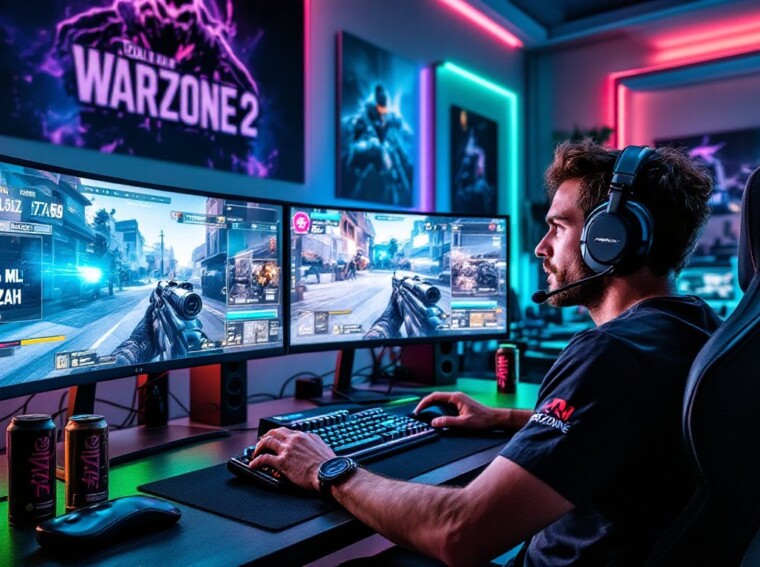
Call of Duty Warzone 2 has cemented itself as one of the most compelling free-to-play battle royales on the market. Whether you’re stepping into Al Mazrah for the first time or grinding for wins in 2026, understanding the fundamentals, from loadout strategy to map control, separates casual players from those consistently clocking victories. This guide cuts through the noise and delivers the exact mechanics, weapon choices, and tactical knowledge you need to dominate. We’ll walk through what makes Warzone 2 different from the original, essential tips for all skill levels, competitive positioning, and the meta shifts that matter right now.
Key Takeaways
- Call of Duty Warzone 2 demands survival and positioning over raw aim—rotate early, claim high ground, and control zones rather than chasing kills for consistent victories.
- Master a dual-weapon loadout strategy: pair a low-recoil long-range AR or battle rifle with a fast-handling SMG, prioritizing recoil stabilization and magazine capacity for every engagement distance.
- Sound awareness and communication are game-changers—use headphones to track footsteps, assign clear roles to teammates, and make precise callouts to build predictive positioning and information advantage.
- Land in medium-loot zones initially to minimize early pressure, secure cash flow at Buy Stations in priority order (Loadout Drop, UAV, Self-Revive), and rotate toward upcoming circles before chokepoints form.
- Warzone 2 meta evolves monthly with seasonal patches—stay ahead of weapon balance shifts by tracking bi-weekly updates, embrace cross-title integration changes, and adapt your loadouts as ARs, SMGs, and sniper viability fluctuate.
- Third-party active fights rather than initiating engagements; preserve health and resources by letting enemy squads trade, then clean up survivors from edge positioning in the final zone.
What Is Warzone 2 And How Does It Compare To The Original
Call of Duty Warzone 2.0, formally branded as Warzone (2022), launched as a complete rebuild rather than a simple sequel. Developed by Infinity Ward and Raven Software, it’s available on PS4, PS5, Xbox One, Xbox Series X
|
S, and Windows, and it’s free-to-play.
Unlike the original Verdansk era, Warzone 2 runs on the same engine as Modern Warfare II (2022) and integrates seamlessly with subsequent titles like Modern Warfare III, Black Ops 6, and Black Ops 7. This shared backbone means weapons, balance patches, and seasonal content flow across the entire Call of Duty ecosystem.
The map overhaul is the most obvious difference. Al Mazrah replaces Verdansk, a fictional Western Asian region with distinct biomes: dense urban centers, industrial compounds, mountainous terrain, and sprawling villages. The new environment demands different routing and rotations than players remember.
Gameplay mechanics shifted too. The circle system now uses multiple circles that merge late-game instead of a single shrinking zone. Strongholds and Black Sites introduce AI factions guarding loot, forcing early-game decisions: do you contest these objectives or avoid them? The new Gulag format launched as 2v2 (with “The Jailer” as a unique twist), though iterations have refined the concept over seasons.
Cross-platform play remains intact, so you’re competing against PC, console, and controller/mouse combinations on equal footing. This focus on accessibility over exclusivity is a strength, your friends’ platform doesn’t matter.
Essential Tips For New And Returning Players
Warzone 2 rewards survival and smart positioning over raw aim. Here’s the baseline every player needs.
Movement and Armor
Master slide-canceling and mounting for cover transitions. In seasons with MWIII integration, dolphin dive adds verticality, use it in building fights. Armor plating is non-negotiable: always carry plates and refresh mid-fight when safe. You’re incredibly vulnerable at half health.
Buy Station Economy
Early Buy Station visits are pivotal. Prioritize these in order: Loadout Drop (access your custom classes), UAV (information wins fights), Self-Revive (insurance policy), and Armor/Ammo Boxes. Cash management determines whether you’re equipped or scrambling.
Weapon Setup
Always carry two weapons: a close-range option (SMG, shotgun, or fast AR) and a long-range tool (AR, battle rifle, or DMR). This pairing handles every engagement distance. Swapping quickly between classes beats reloading during intense moments.
Sound and Awareness
Headphones aren’t optional, footsteps are audio gold. Proximity chat (where available) reveals enemy positions through speech. Constant pings from teammates and pinged enemy shots create real-time intel maps in your head. Players who ignore audio cues die predictably.
Positioning Over Fragging
New players chase kills: veterans chase zone control. Stay alive longer than enemies, rotate early before chokepoints clog, and third-party fights rather than initiating them. One extra player makes the difference in endgame scenarios.
Weapon Selection And Loadout Strategy
Warzone 2’s weapon pool draws from multiple annual titles, meaning the meta shifts seasonally. That said, fundamental loadout structure remains constant.
Primary Weapon (Long-Range)
Low-recoil assault rifles (AR-15 variants, FTAC Recon models) or battle rifles dominate this slot. Prioritize controllability, damage range, and magazine capacity over raw TTK. Optics matter, pick sightlines you’re comfortable tracking through. Avoid overly niche attachments: stability and range always win.
Secondary Weapon (Close-Range)
High-mobility SMGs or fast-handling ARs excel here. The MPL, Jackal PDW, or similar SMGs pair well with longer-range primaries. Fast swap speed is critical, you should be able to smoothly transition from range to CQB without fumbling.
Attachment Priorities
Recoil stabilization is tier-zero: miss shots and you’re dead. Long-range barrels and damage-increasing muzzles come next. Large magazines (30+ rounds minimum) prevent mid-fight reloads. Optics are personal, experiment in multiplayer first.
Perks and Equipment
Battle Hardened and Bomb Squad keep you alive against tacticals and explosives. Double Time and High Alert improve rotations and threat awareness. Resupply-type perks feed grenade-heavy playstyles. Equipment-wise, smoke grenades create escape or plant cover: Semtex or frag grenades handle grouped enemies and buildings.
Meta shifts occur roughly monthly as balance patches hit. Follow current Warzone patch notes to stay ahead of nerfs and buffs.
Map Knowledge And Landing Strategy
Al Mazrah isn’t intuitive at first glance. Learning POI density and loot distribution accelerates your early-game consistency.
High-Loot Zones (High Risk)
City centers, airports, and major industrial compounds spawn premium loot but attract squads. Landing here is viable if you have team coordination and confidence in early gunfights. Expect contested drops and faster rotations.
Medium-Loot Zones (Balanced)
Smaller compounds, villages, and outskirts between named POIs offer solid loot with lower pressure. New players should anchor here initially. Grab floor weapons, cash, and armor plates, then push toward a Buy Station to secure Loadout Drops and UAVs.
Landing Guidelines
If you’re flying from the edge of the flight path, land small compounds first. Grab one solid weapon, a few plates, and move toward Buy Station clusters before the first circle closes. This approach minimizes early pressure while building economy.
Rotation Strategy
Move toward the upcoming circle early, don’t wait until it shrinks. Rotating preemptively keeps you ahead of third-partying and chokepoint clusters (bridges, narrow valleys, city streets choke teams regularly). Teams caught rotating through tight spaces die to crossfires.
Zone Prediction
Track circle shifts mentally. High-ground rotations (hills, tower-heavy areas) outvalue open rotations (fields, roads). Position on the edge of zone rather than the center, center areas become firing squads in final minutes.
Advanced Tactics For Competitive Play
Competitive Warzone separates skilled squads through positioning, communication, and information chains.
Positioning Fundamentals
Always claim high ground, windows with headglitch angles, or cover that lets you peek without exposure. Fight from spots that limit enemy sightlines. Avoid open ground and center-zone rotations in endgame. Stack behind teammates (two players minimum per angle) so one person holds while another trades kills if the first falls.
Communication and Roles
Assign roles: In-Game Leader (IGL) directs rotations, entry fragger initiates contact, and overwatch player covers flanks. Callouts must be precise, “east side of building on second floor” beats vague directional pings. Accurate intel compounds into predictive positioning.
Information Economy
Chain UAVs into your rotations, one UAV every 3-4 minutes if cash allows. Ping all enemy shots to build a mental map of team positions. Watch circle movements: enemies often rotate through predictable corridors toward safe zones. Ambush these patterns.
Trade Kills and Team Synergy
Kill trading, where one teammate removes a threat while another finishes them, prevents 1v3 recoveries. Synchronize pushes so enemies can’t target-switch. Staggered positions (not all in the same building or hallway) make you harder to wipe.
Endgame Aggression
Rather than initiating first fights, third-party active engagements. Let two teams trade resources, then clean up survivors. This approach preserves health, armor, and ammo. Edge positioning (on the rim of final zone rather than center) lets you watch chaos unfold while staying protected.
Latest Updates And Meta Changes In 2026
Warzone’s 2026 landscape reflects integration with Black Ops 7 and ongoing seasonal rotations. The meta evolves monthly, not quarterly.
Current Weapon Trends
The meta shifted toward mid-range efficiency in recent seasons. ARs with 5.56 ammo (faster TTK at medium distance) have overshadowed pure long-range builds. Sniper viability fluctuates with aim-assist adjustments. SMG dominance in buildings remains constant, close-quarters weapons never fall from grace in Warzone 2.
Seasonal Content
New limited-time modes rotate frequently, hot pursuit racing events, modified circle mechanics, and variant maps appear every few weeks. Check recent Call of Duty leaks to anticipate what’s coming next. Datamined weapons and balance changes are usually accurate within one season.
System Requirements
PC specs have risen. Modern mid-to-high GPUs, 16 GB RAM, and SSD storage are now the standard recommendation. Console versions target 120fps on PS5 and Xbox Series X, though some players prefer frame-rate trade-offs for higher visual fidelity.
Patch Cadence
Balance updates arrive bi-weekly minimum. Recoil patterns change, damage ranges shift, and mobility adjustments affect TTK calculations. No guide can predict the exact meta two months forward, patch notes are the authoritative source. Tools like DSOGaming track performance changes across patches if you want detailed breakdowns.
Cross-Title Integration
Weapons from Black Ops 6 now inherit Warzone balance changes, and vice versa. This ecosystem approach keeps the game fresh but requires constant adaptation. Favorite guns from multiplayer don’t automatically dominate Warzone without tuning.
Conclusion
Warzone 2 rewards discipline, information, and adaptation. Master loadout fundamentals and survival tactics first, then layer in map awareness and team coordination. The game’s free-to-play nature means fresh players arrive constantly, your edge comes from studying patch cycles, positioning theory, and ruthless endgame discipline. Consistency beats flashy plays. Stay wired to patch updates, rotate smart, and let the meta shift guide your adaptation. Win rates climb when you stop chasing kills and start controlling zones.